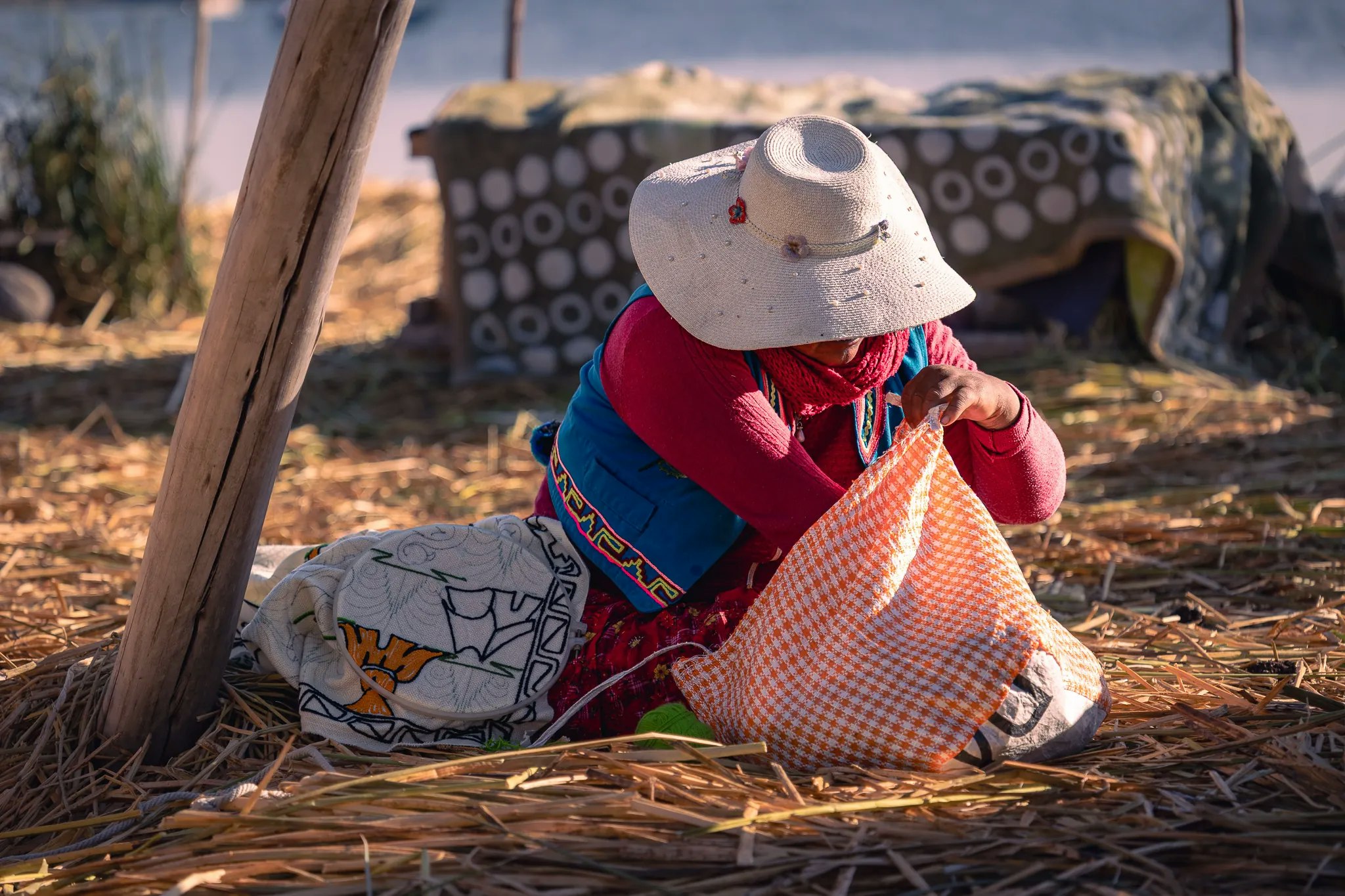
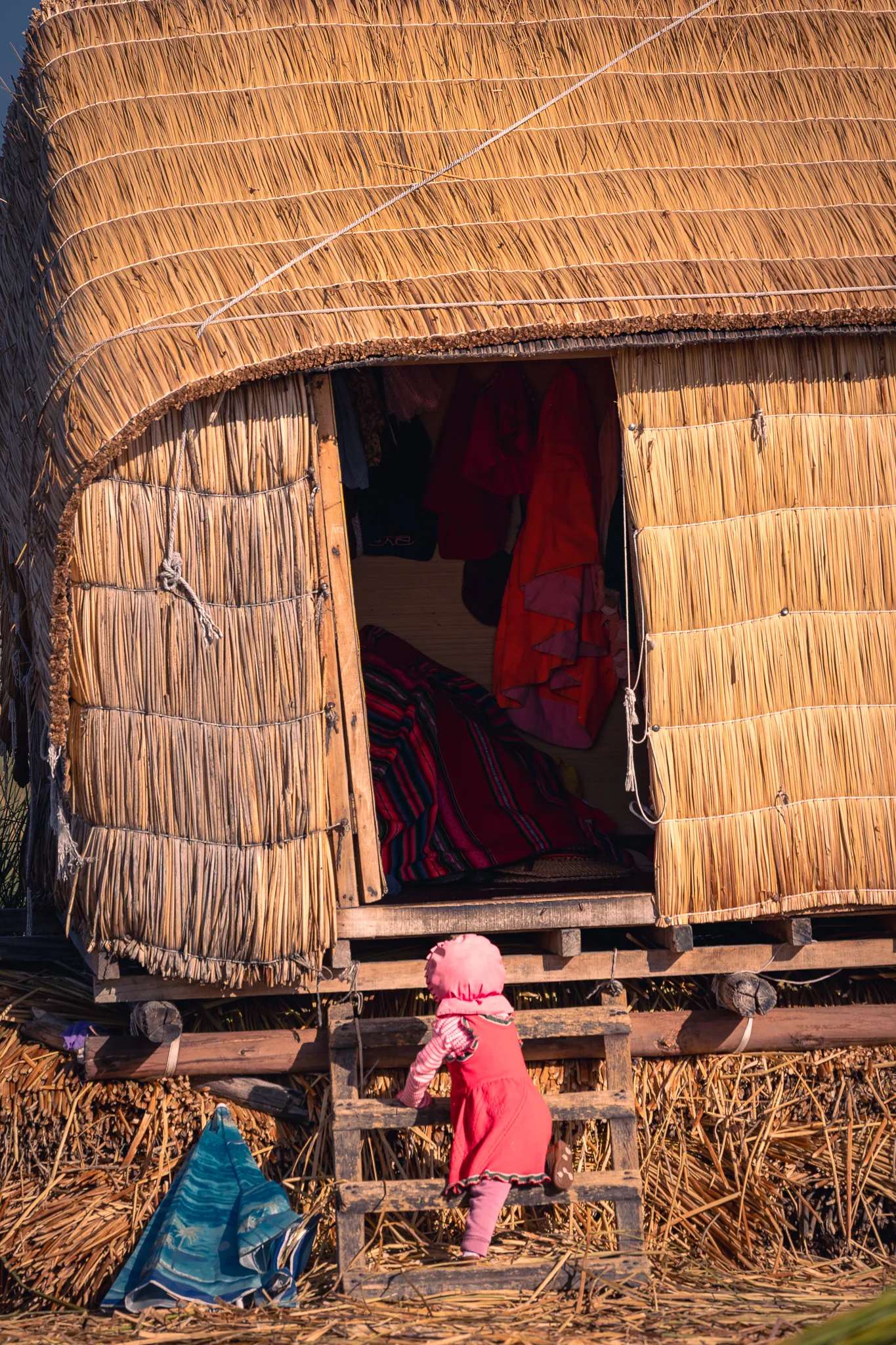
Exhausted and content we arrived again in Cusco after the five day Salkantay experience to prepare for the next step in our travels. Continuing further south towards Chile and Patagonia, we first entered Bolivia with the main target of seeing the massive salt flats of Uyuni. Entering the noticeably poorer Bolivia by bus at lake Titicaca was quite a contrast. We stayed a night in a place called Copacabana (Brazil's Copacabana is named after this town apparently - at least according to the hostel host) where the yet stronger smell of pollution, the poorly maintained roads, the uncooled raw meats in the market stalls and the traditionally dressed women gave us the impression that time was set back a couple of decades. This impression stuck with us during our whole stay in Bolivia which was only a week. We spent the night in Copacabana in an outstanding hostel called Las Olas with a huge room (till today I'm not sure if there was a mistake in the booking, we had 7 beds for ourselves). Quite unexpectedly, a huge thunderstorm swept across the place at night and much to our surprise a lightning struck the lightning rod in close proximity to our room. Waking up to the frightening buzzing sound followed by a deafening bang and flickering lights was quite literally a shock.
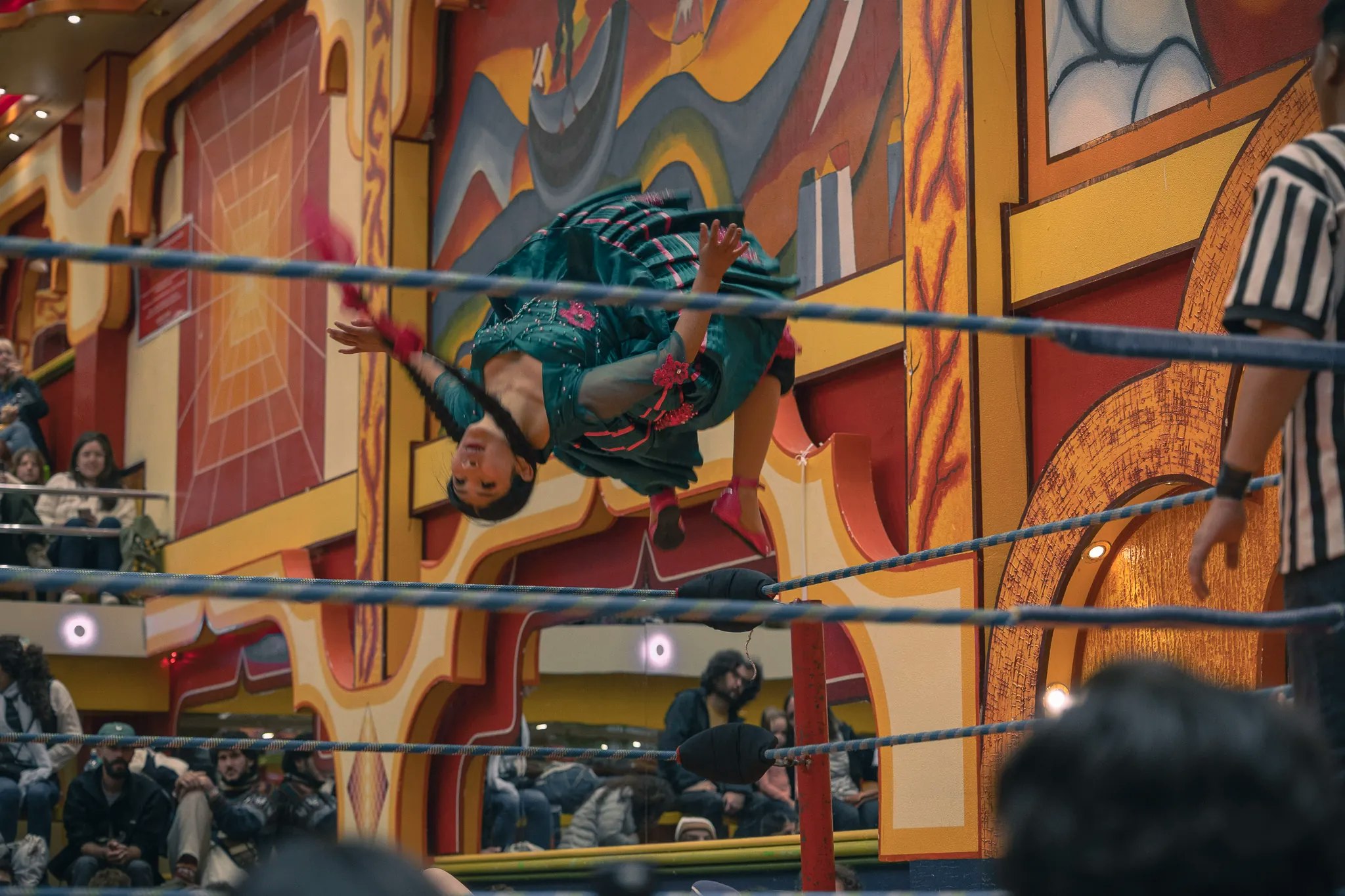
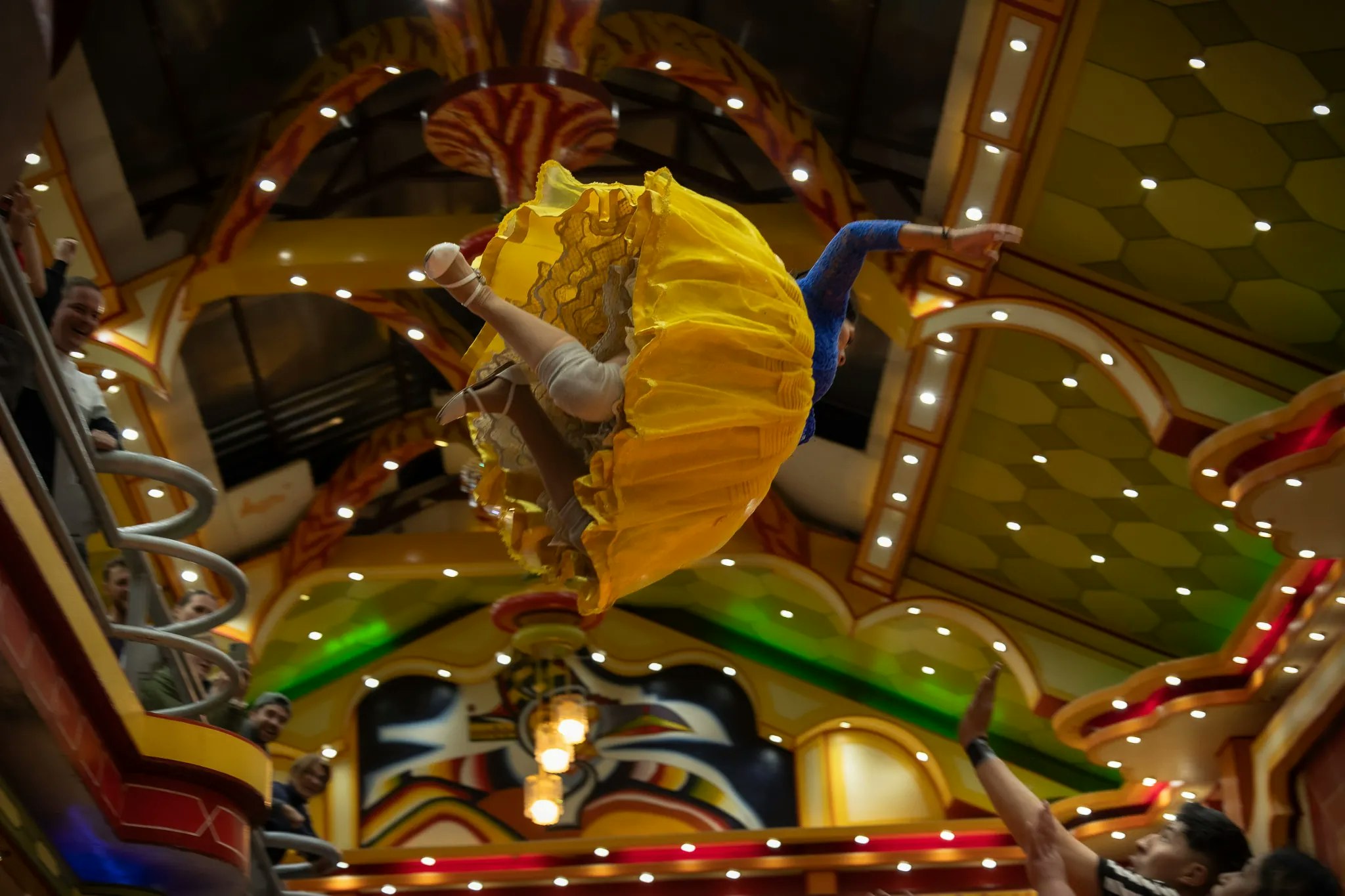
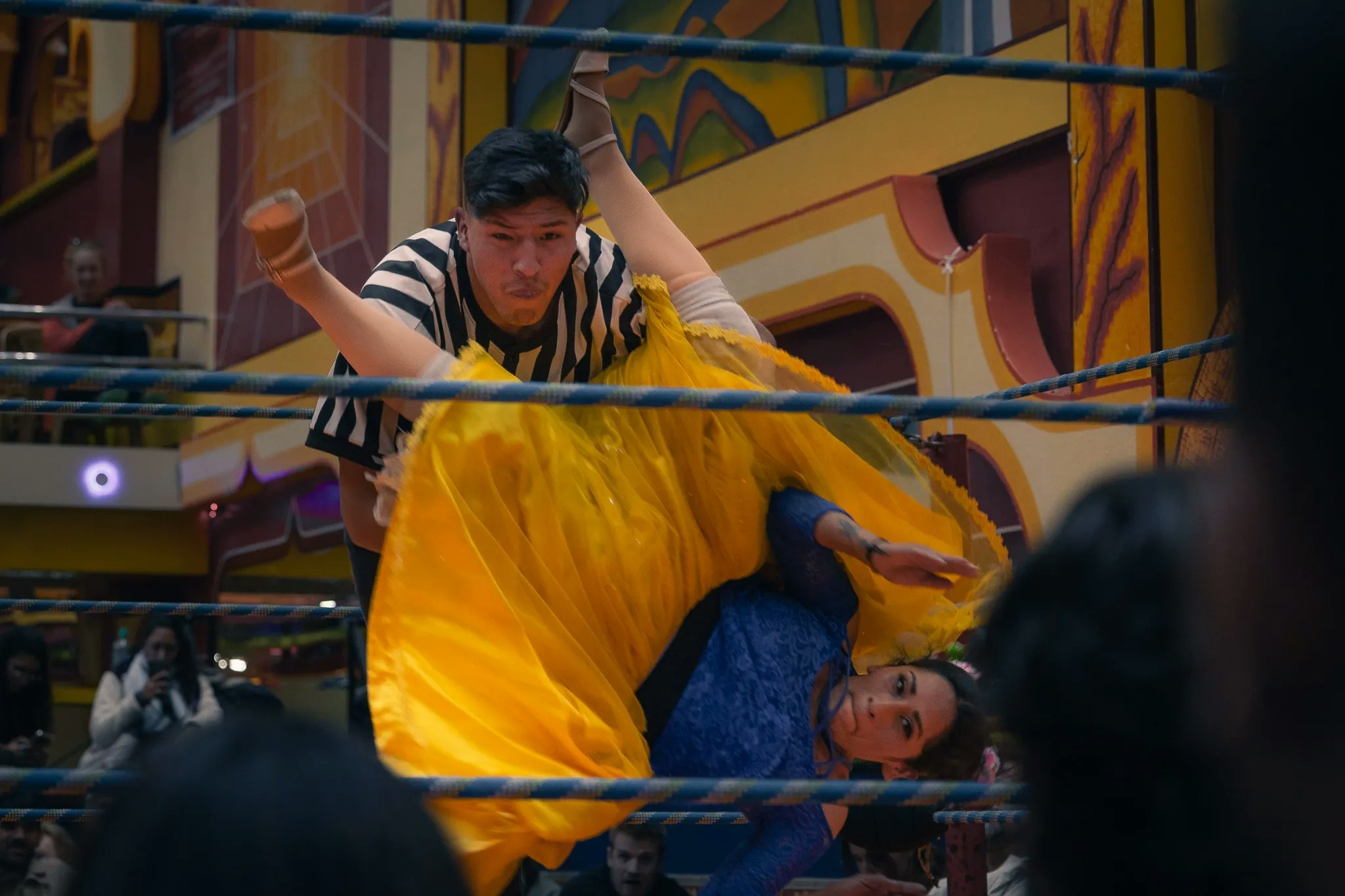
We soon made our way towards Bolivia's partial capital La Paz. We both weren't terribly impressed by the city, but an entertaining highlight, at least for me, was the Cholitas Wrestling. Cholita was (sometimes it still is) a derogatory expression for Aymara or Quechua women (indigenous groups in South America) but the wrestling embraces the term and shows traditionally clothed women fighting each other (and the referee as it turns out) in the ring. Some incredibly athletic displays left me dazzled and we spent a fun evening almost exclusively amongst gringos. What else left an impression from La Paz was the witches market where they sell, somewhat macabre, alpaca foetuses.
We were both looking forward to leave La Paz, not only at the prospect of seeing the salt flats.
Once in Uyuni, the starting point for the tour that also served as a supposedly easier border crossing into Chile, we excitedly found the tour operator and our 4x4 vehicle for the next 3 days. Our group consisted of two cheerful French women called Laura and Sophie, the driver José, and Ben, a lightly packed Swede with whom we spent a lot more time after the tour and who turned out to be an absolute legend (I hope you're reading this).
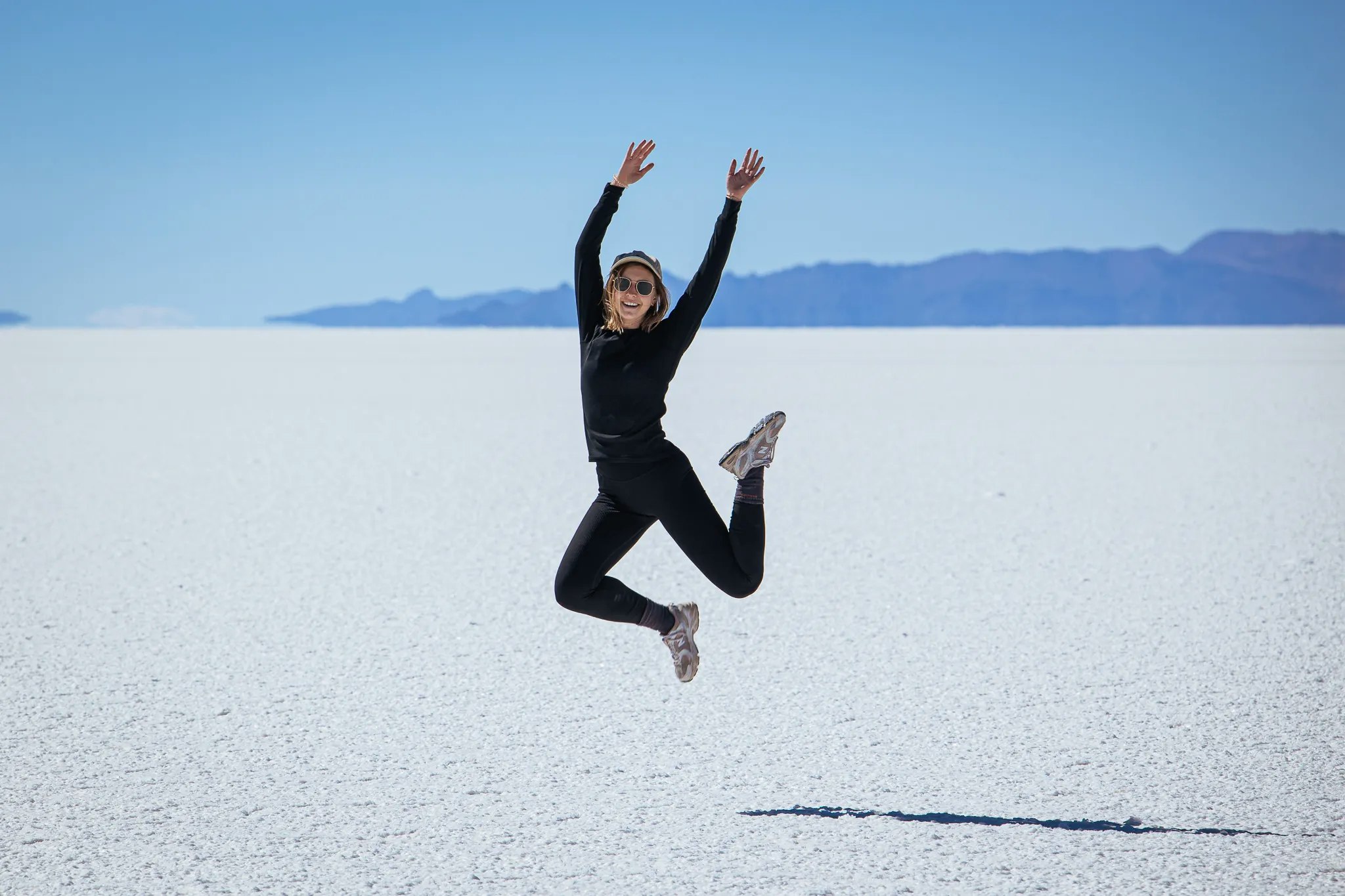
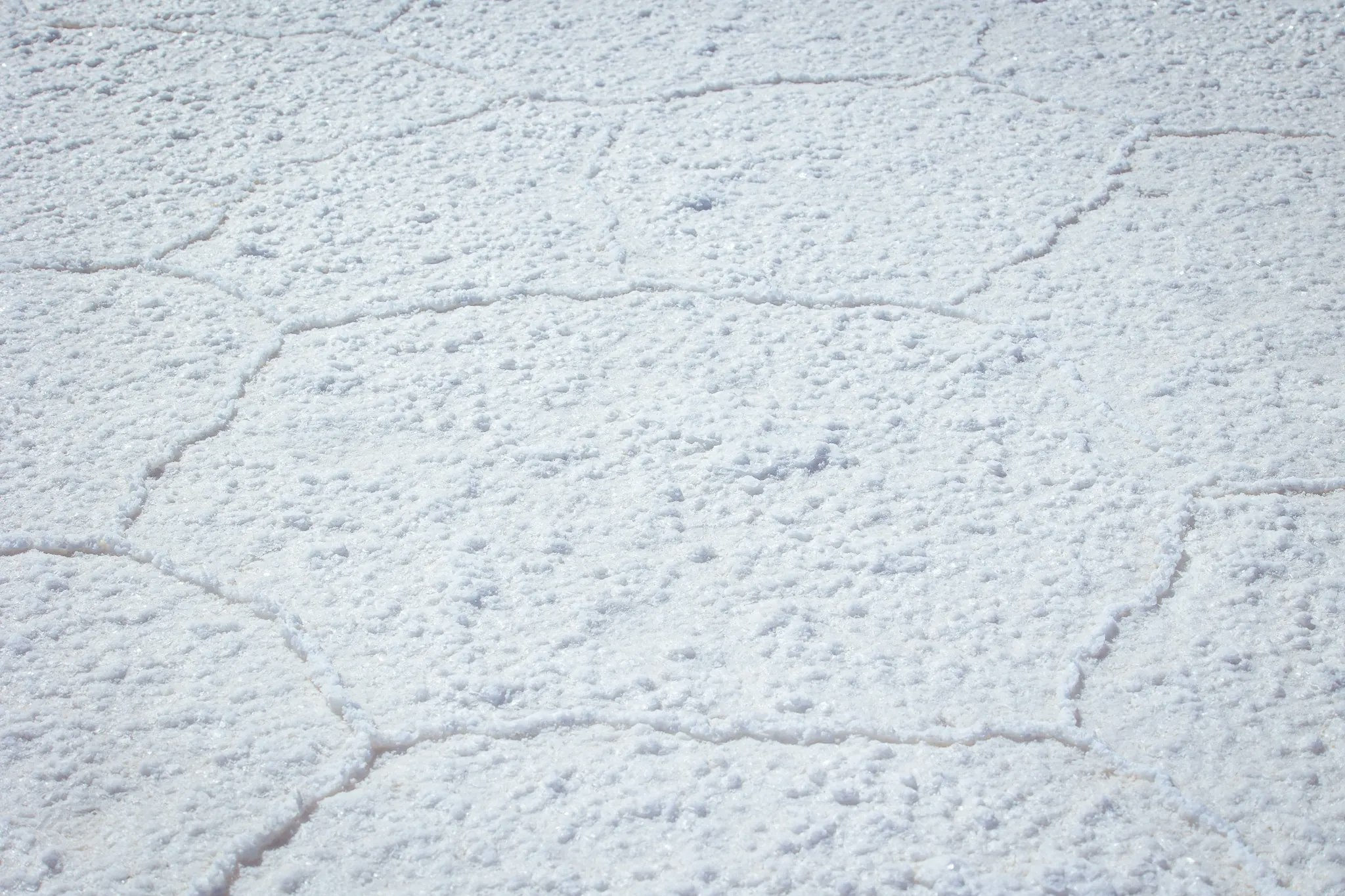
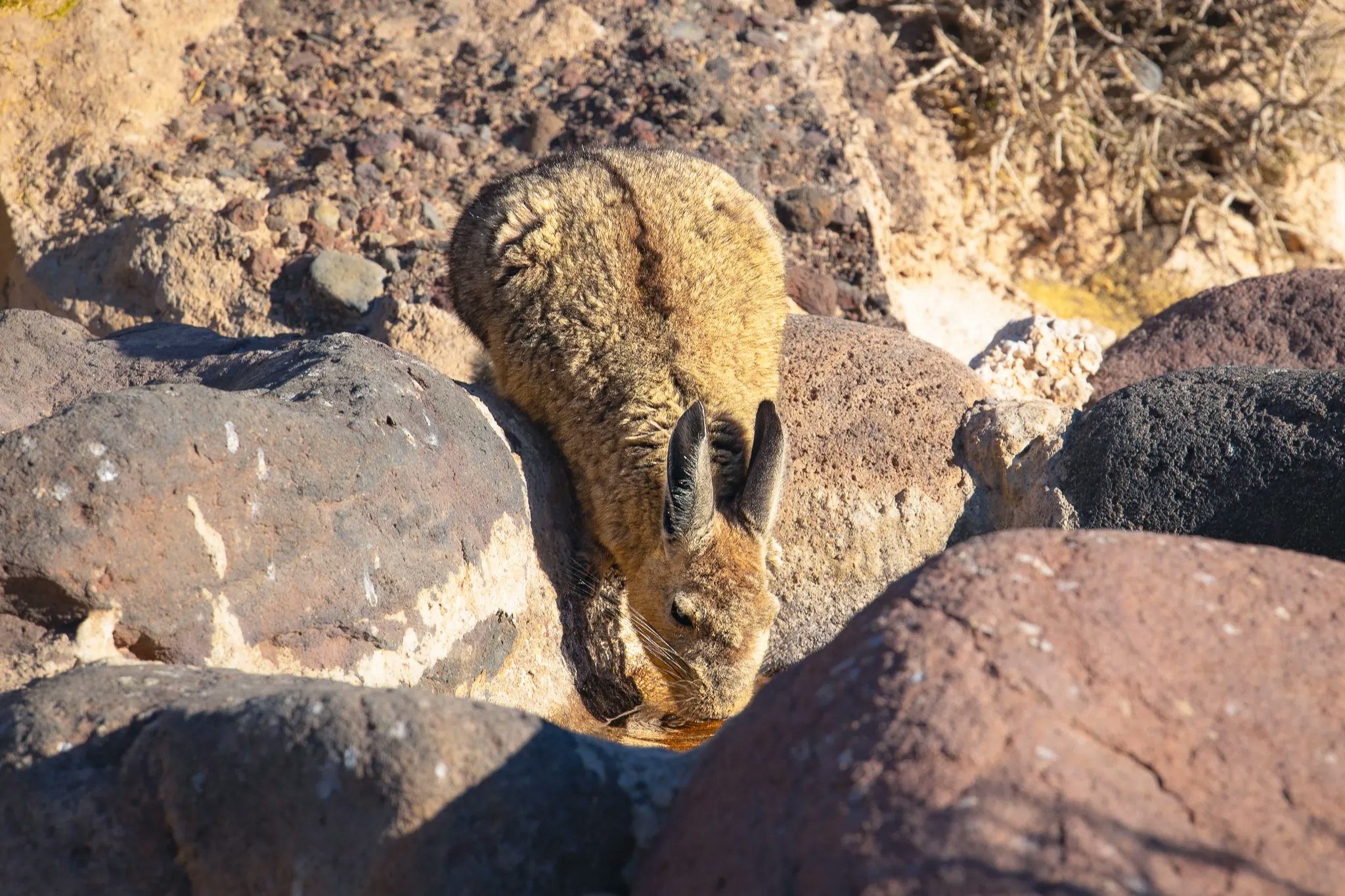
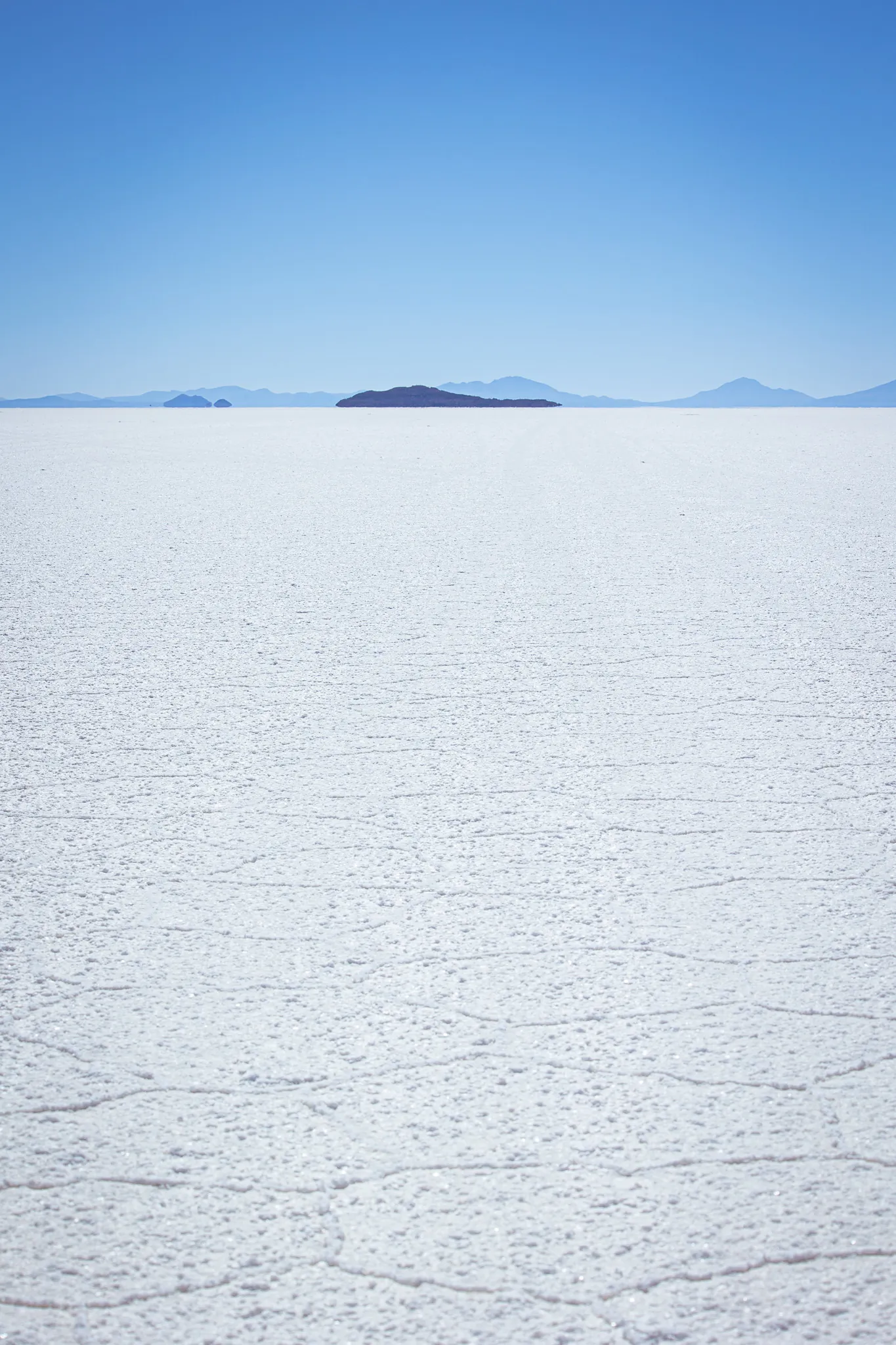
The tour started with a couple of sights close to Uyuni before we left for the desert. The landscape quickly transitioned into an incredible vastness of whites, only showing the top layer of unimaginable amounts of salt at times going down more than 100m (although on average "only" a couple of meters). We stopped for a few fun photos jumping and running, before moving on to an island covered in stunningly tall cacti. The short hike to the island's top part reminded us that we were still on an unusual altitude of above 3600m. Surprisingly, we even spotted a rabbit-like creature called Viscacha. After this island we went on towards our first accommodation, but stopped for a glass of Bolivian red wine before while we watched the sun set - a delightful sight in the expansive flats. The first evening of the tour we slept in a basic refuge almost entirely made out of salt including the floors, which was made of coarse grains of salt.
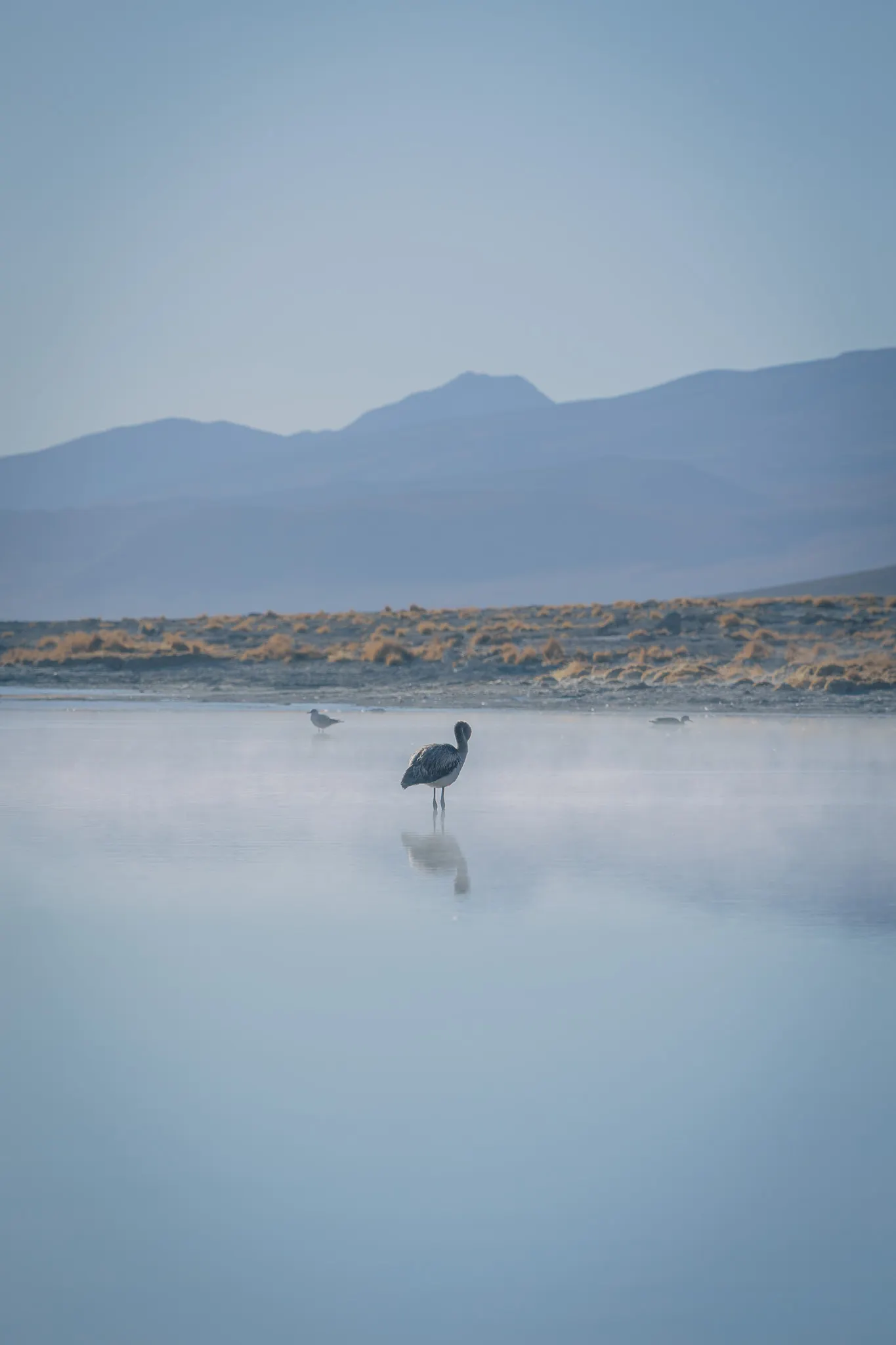
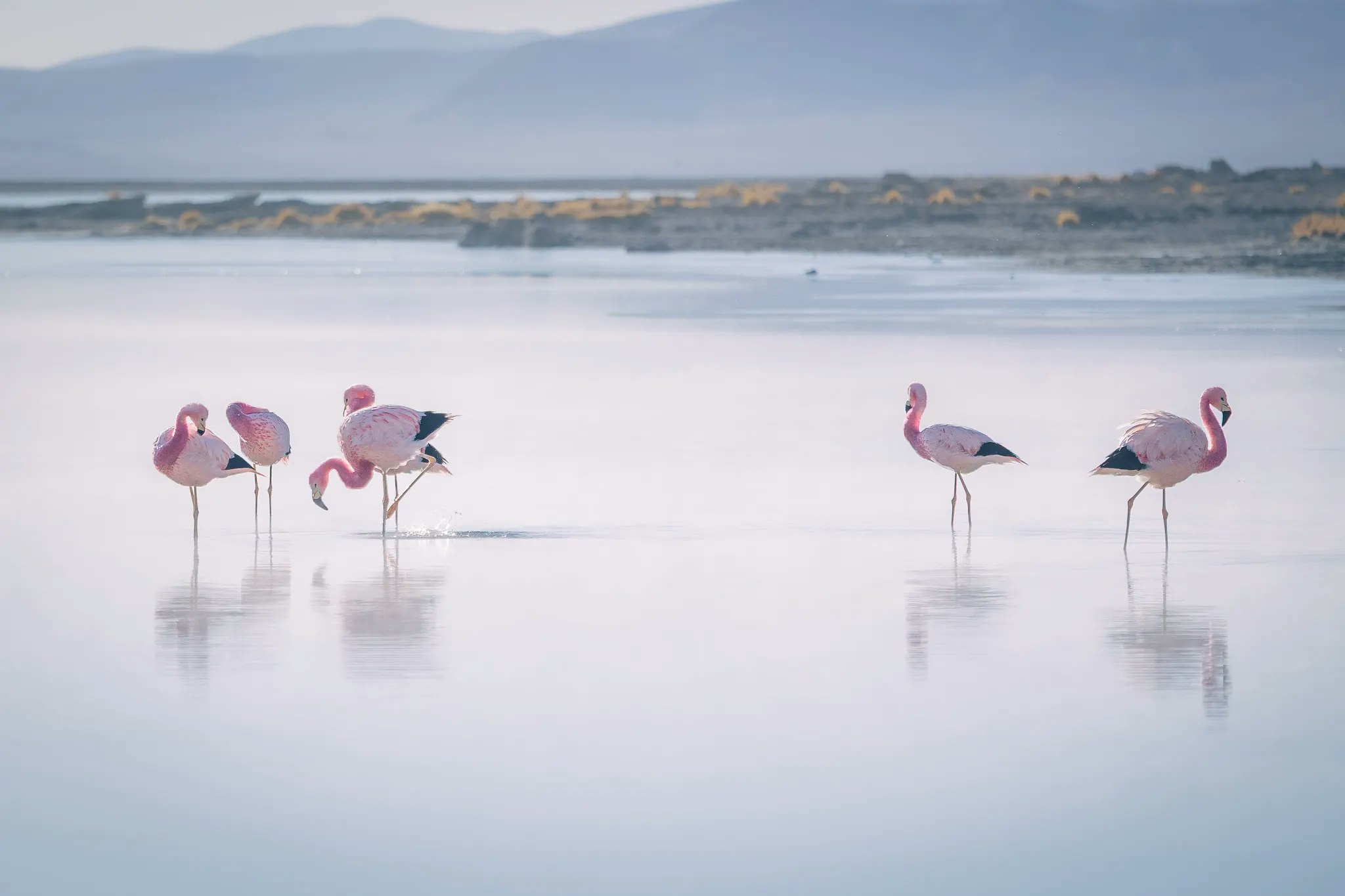
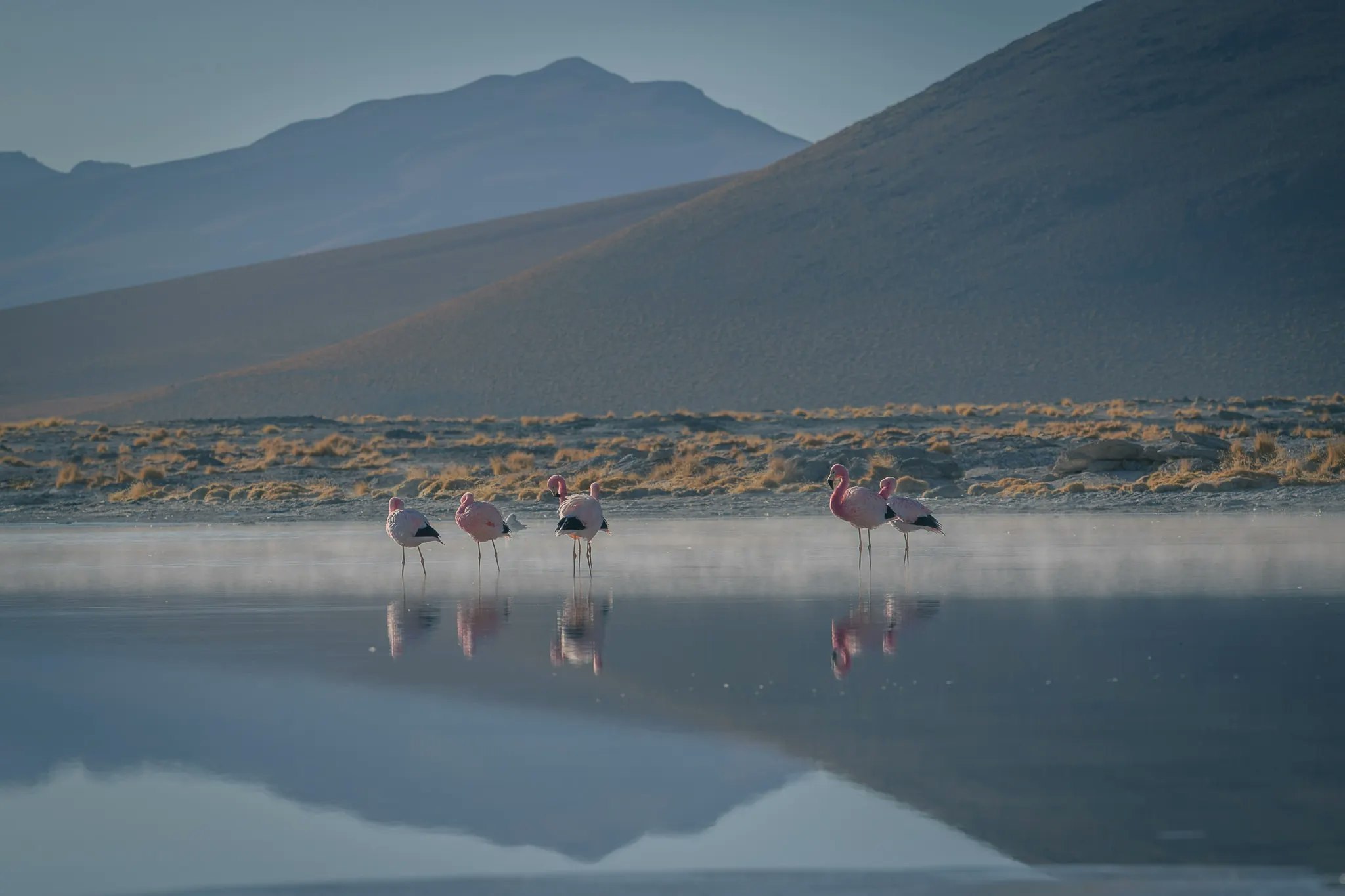
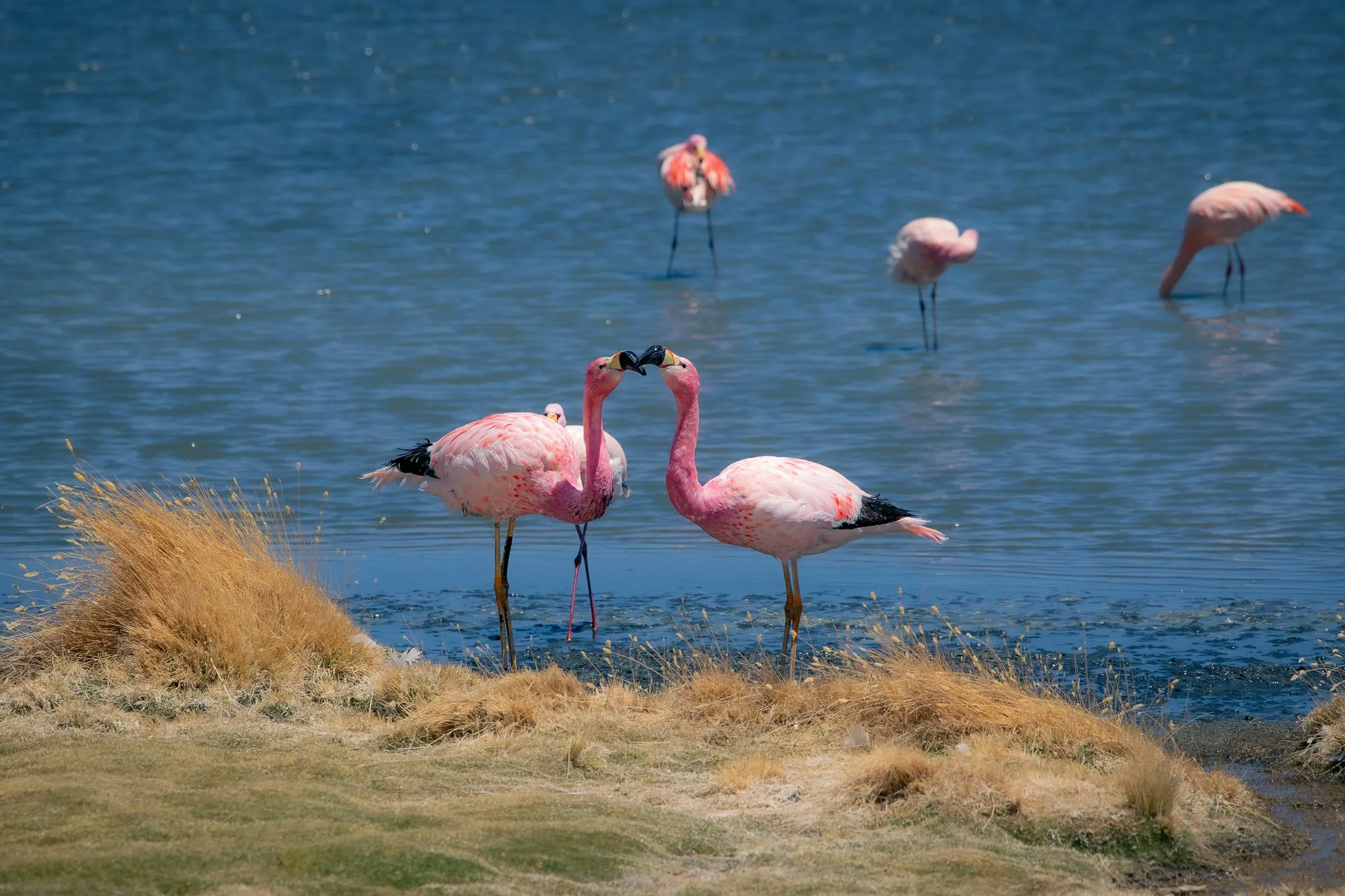
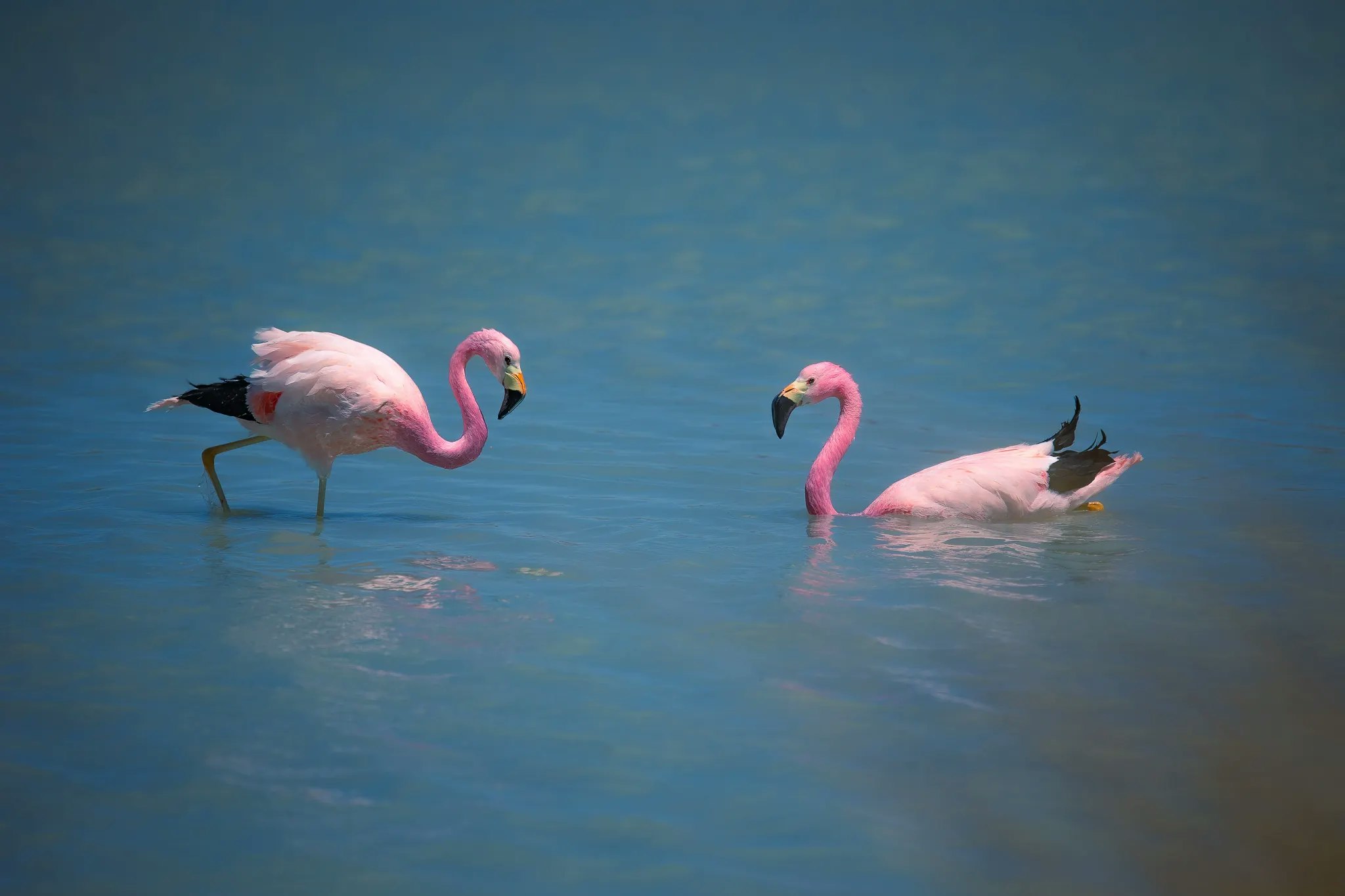
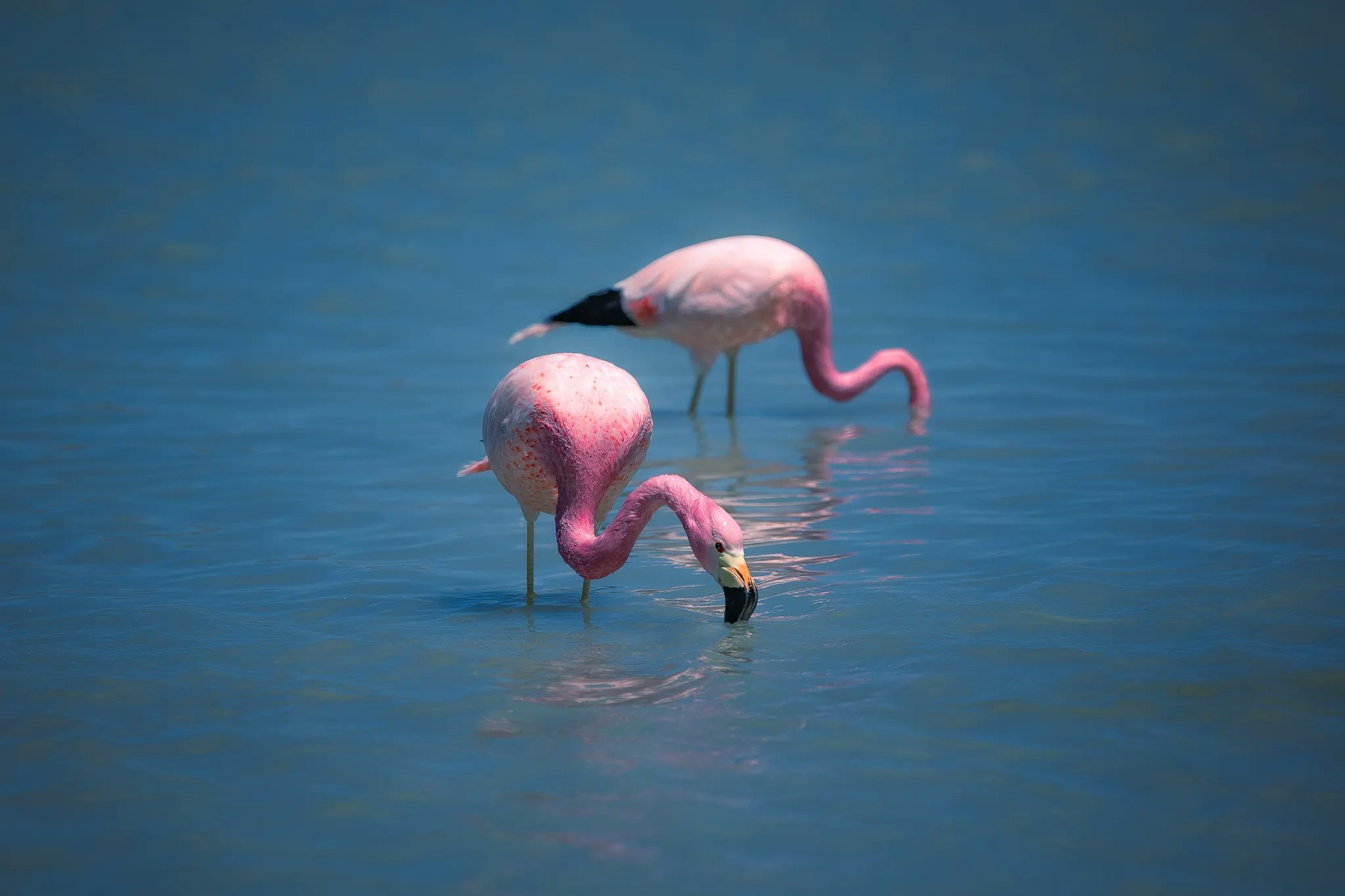
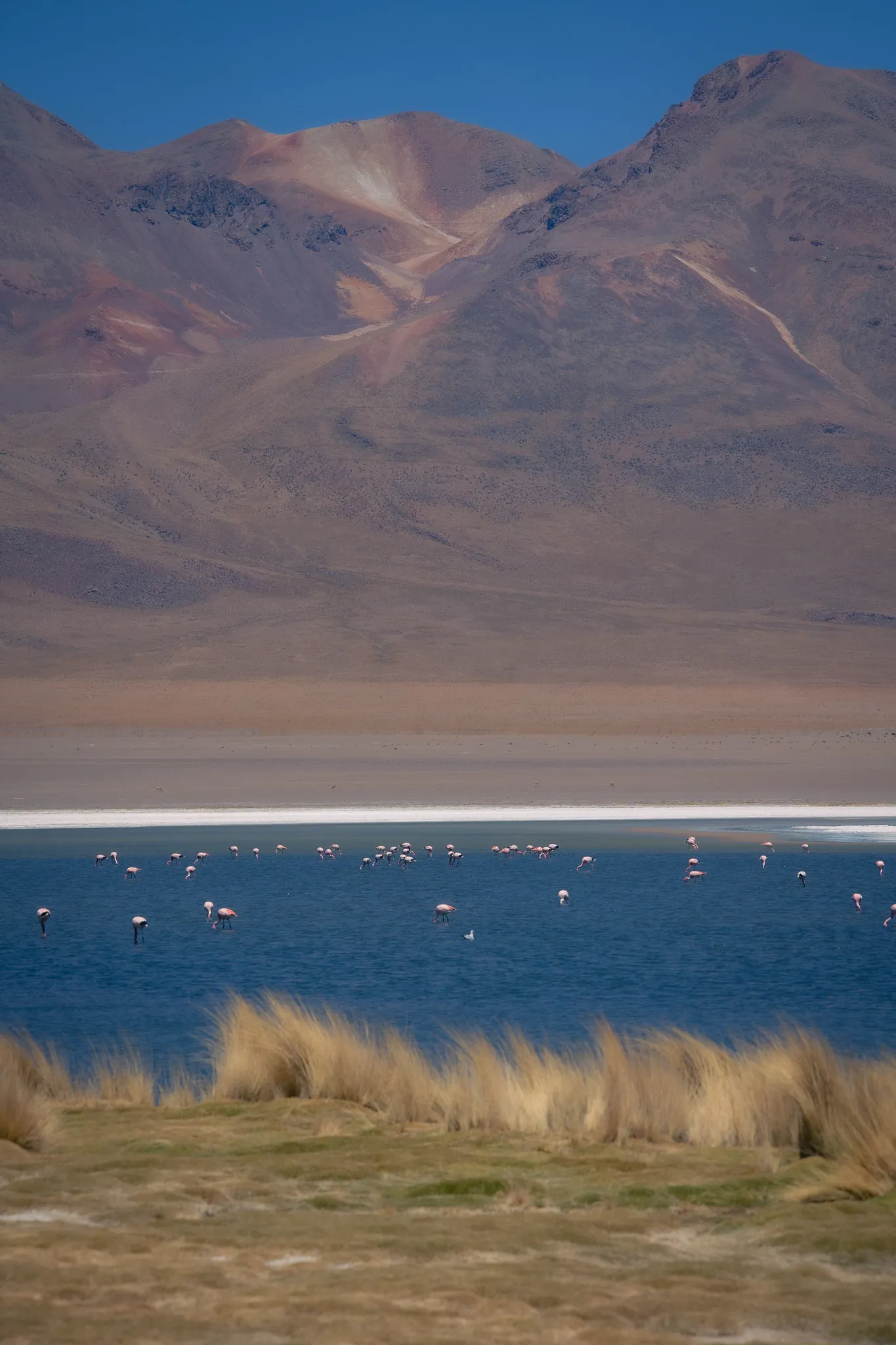
We visited the probably most memorable place of the whole salt flats tour on the second day. A couple more islands were on the agenda for that day, but the most impressive spots were two lagoons with uncountable flamingos in it. There are 3 types of flamingos, the Chilean and Andean Flamingos as well as James' Flamingos, all of which we saw on the second day. Alongside with the unbelievably colorful lagoons surrounded by volcanoes it was one of the most beautiful views that we've ever had!
The last day of the tour was also a special one: it was Anna's birthday! Next to this tour, she also wished to be in two countries on her special day, so that's what we did! But before the border crossing to Chile, we had an early start with a good amount of activities again.
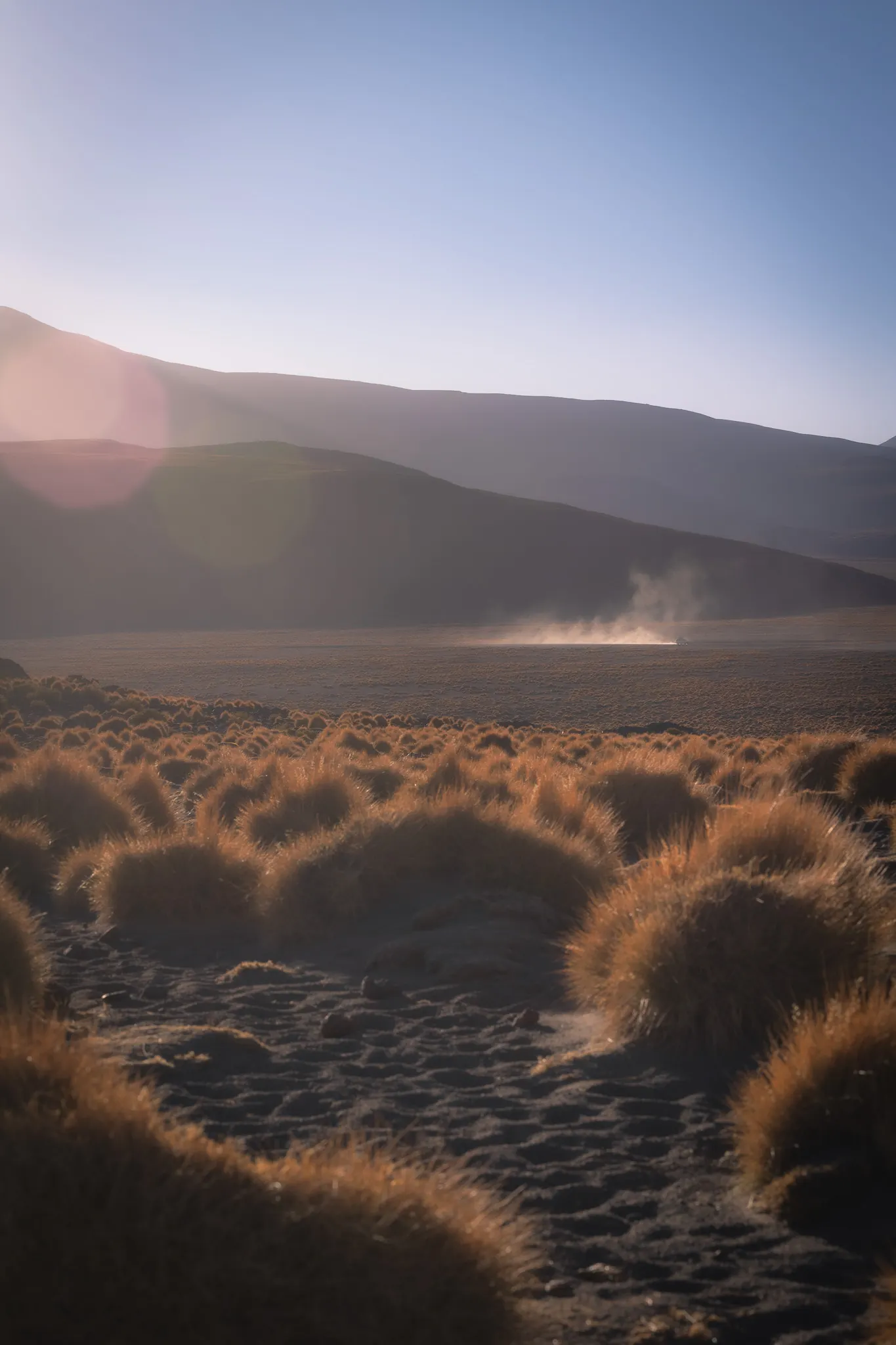
After leaving at around 5am, we headed out to see some of pachamama's outlets: about an hour's drive away from our accommodation there was an area full with visible volcanic activity, from geysers to blubbering mud pods everything was moving and there was a strong smell of sulfur in the air. When walking past one of the pods, suddenly a blob of warm earth spat from underneath onto Anna's trousers! We interpreted it as earth's way of congratulating her on her birthday. This impressive site was followed by a quick and relaxing bath in a natural hot spring at an ideal 38°C - considering the ice on the edge of the neighbouring lake quite a contrast. Not too bad of a morning on a birthday! This was unfortunately also the final part of the endeavour before crossing the border which was cumbersome and long.
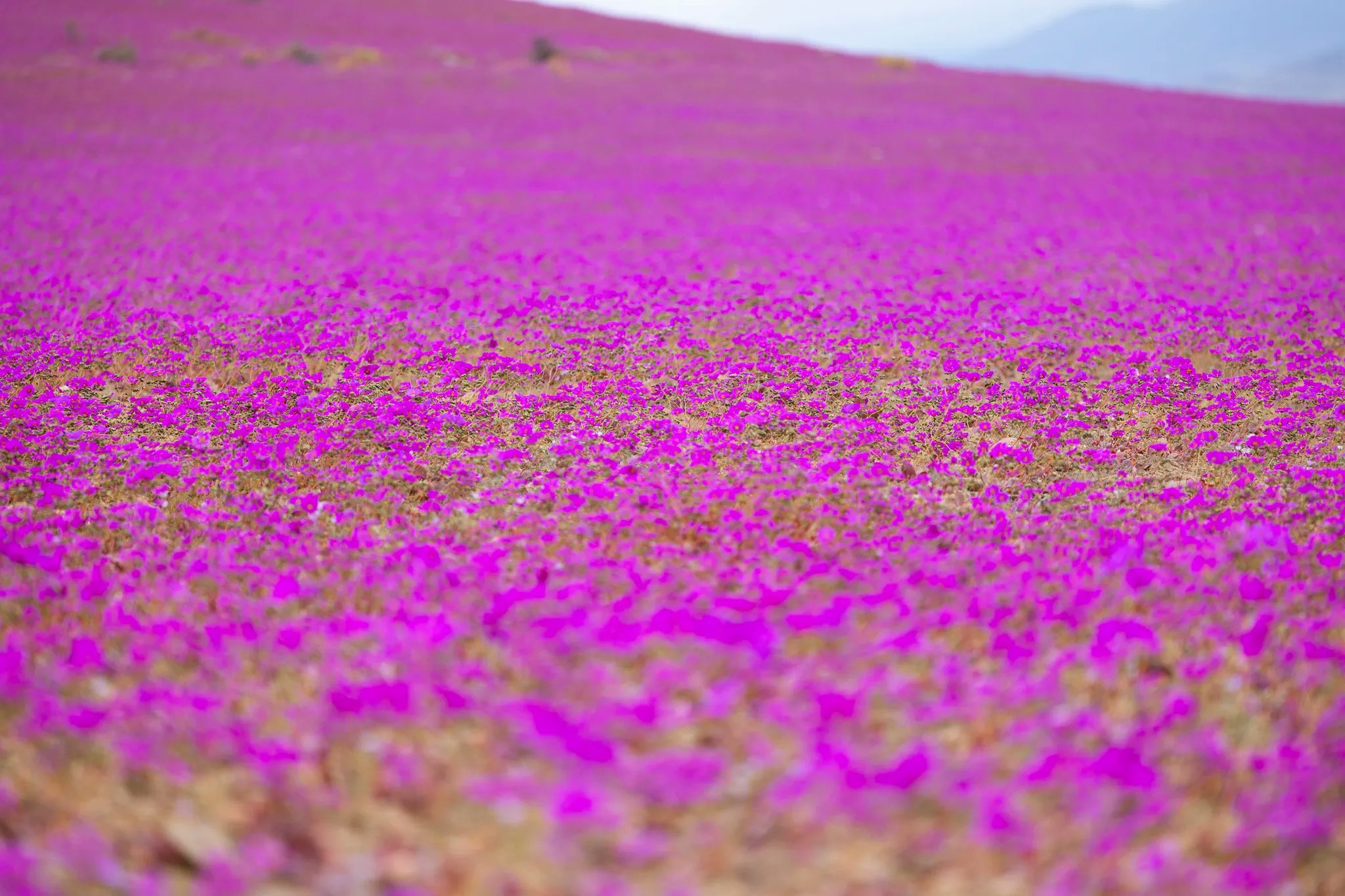
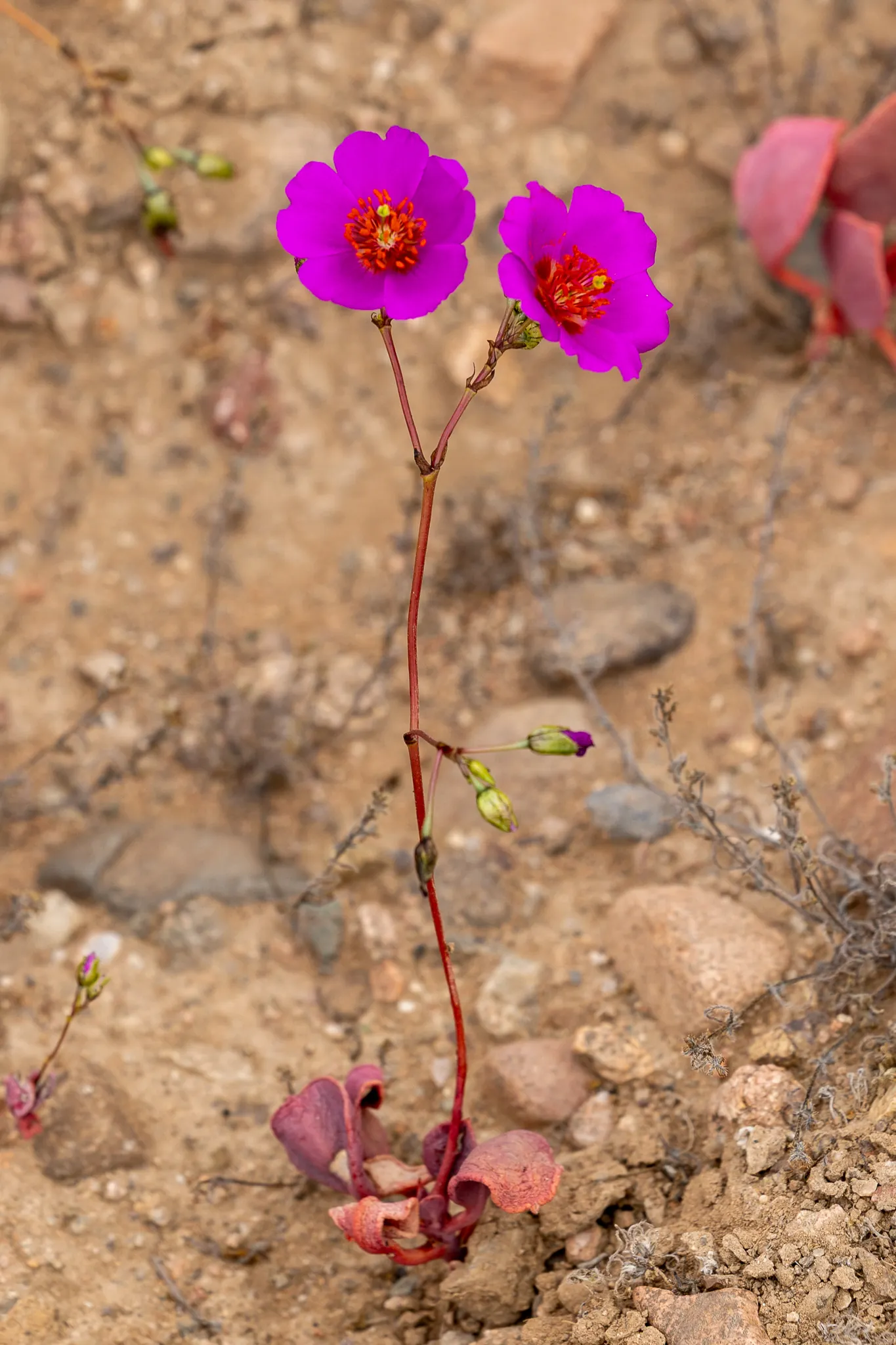
 Upon arriving in Chile we immediately felt the improvement in the infrastructure, roads were paved again, the smell of pollution was much weaker and in general it just felt like we were back in a more modern place. The place we arrived in, San Pedro de Atacama, is located, as its name suggests, in the Atacama desert. This is the driest desert there is and for this reason (and for it's altitude, or rather its effects on the atmosphere) it's ideal for astronomy. Another interesting fact or phenomenon is that once every 5-7 years there is some rain (or in this instance two days of rain in April) that's enough to transform the empty desert into a blooming desert. Coincidentally, we were there exactly at the right time to see it bloom. We actually didn't even hear about it until a friend back home reminded me about it. After checking where it was strongest we rented a car to drive towards it, but after our stay in San Pedro further south from La Serena. While we didn't see the flowers everywhere we looked, there were parts where it was really impressive, an area of maybe 2-3 acres of pink flowers on brown sand, and at another place we found it just to be very green (we didn't have anything to compare it to so we couldn't really tell how special it was).
But before that, back in San Pedro de Atacama, we met up again with Ben, the Swede from the salt desert trip, and a British couple that he got to know beforehand, Amy and Ewan. We immediately got along and ended up spending a couple more dinners and excursions together as a group of 5 as we headed towards similar directions. What a treat to have come across such a wonderful bunch of people, it truly adds so much to the whole travelling experience!
Our path lead to La Serena first, a city on the coast of Chile about five hours north of Santiago. We spent a couple of days there and in the surroundings such as the aforementioned flowering desert, and also the valley close by, the Elqui valley, which is also very popular for stargazing and generally has laid back towns.
After that we soon headed towards Santiago in one of our last buses, another exhausting and smelly experience. Santiago positively surprised us both, while it's not a beautiful city per-se it has a lot to see and amazing food (which always is a strong argument from my point of view :)). This was our last stop before stunning Patagonia, where we had another 5 day trek planned: the W-Trek. But more on that in the next post!